Automated sliding gates
Wide-span vehicle entrances where space, security and reliable opening cycles matter.
Automated gates and barriers
LBS helps industrial sites specify, repair and maintain automated gates, rising arm barriers and access control systems so authorised vehicles move safely from the entrance to goods-in and dispatch.
Why it fits LBS
A failed barrier can hold delivery vehicles outside the site. A gate left open can weaken security and yard control. Poor access control can send trailers into the wrong area before the loading team is ready. LBS treats gates and barriers as part of the wider vehicle movement route, alongside dock levellers, industrial doors, shelters and bay safety.
What we offer
Support can be shaped around a new installation review, a failed entrance, a planned maintenance programme or a wider Loading Bay 360 review.
Wide-span vehicle entrances where space, security and reliable opening cycles matter.
Controlled site access where entrance geometry, wind exposure and safe movement need careful review.
Fast vehicle control for staff, visitors, delivery drivers, car parks and yard entry points.
Keypads, intercoms, fobs, induction loops, safety loops, ANPR-ready routes and traffic control logic.
Practical checks around photocells, pressure edges, force limitation, controls, guarding and emergency release.
Fault diagnosis, emergency attendance and planned servicing for all-makes gate and barrier equipment.
Best sales angles
Use gates and barriers to control arrival flow before vehicles reach dispatch bays, doors and dock levellers.
Reduce unauthorised entry, overnight exposure and uncontrolled vehicle movement around people and stock.
Powered gates and barriers are machinery. Planned checks, safety devices and clear records help managers prove control.
Sectors we serve
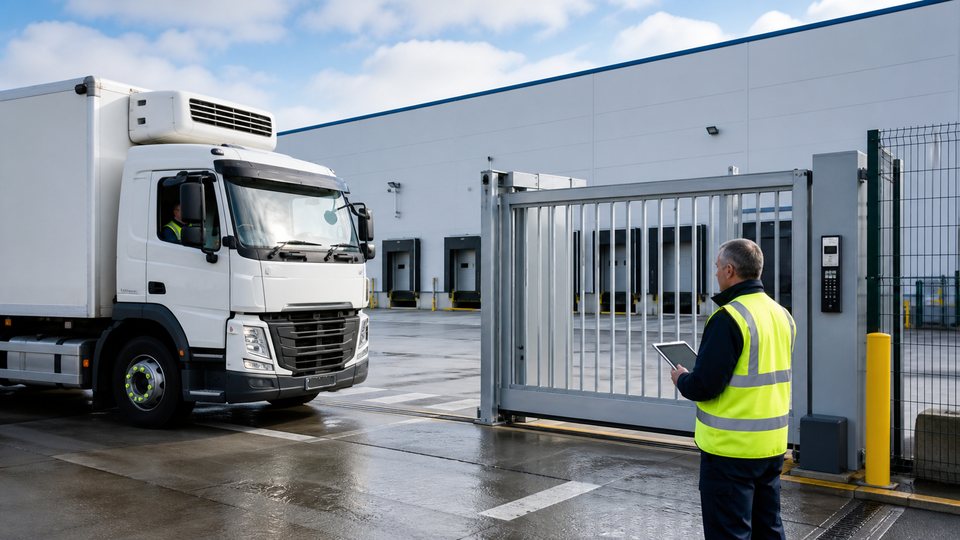
Challenge: hygiene-sensitive yards, cold-chain dispatch windows and controlled visitor or driver movement.
LBS answer: access review, planned checks and fault response that keeps authorised traffic moving without weakening site control.
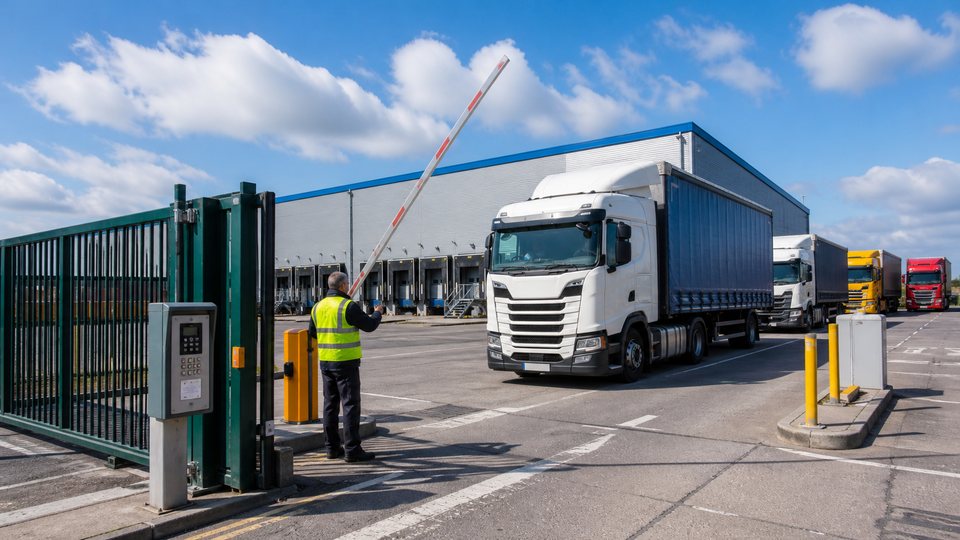
Challenge: high trailer volume, arrival sequencing, overnight security and yard congestion.
LBS answer: barrier maintenance, access-control fault finding and entrance planning linked to bay throughput.
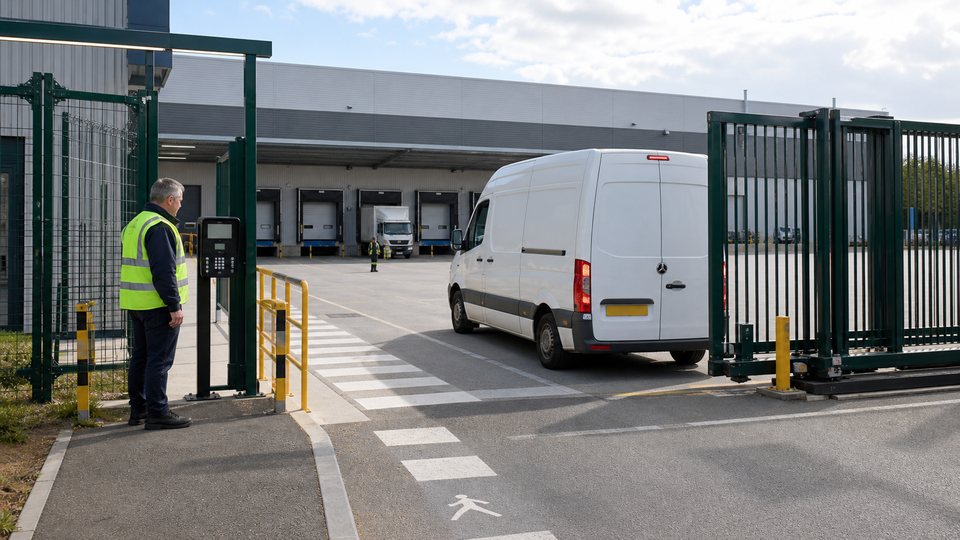
Challenge: mixed vans, HGVs, staff cars, visitors and pedestrians meeting around goods-in routes.
LBS answer: practical segregation, gate and barrier support and safer traffic movement before the warehouse threshold.
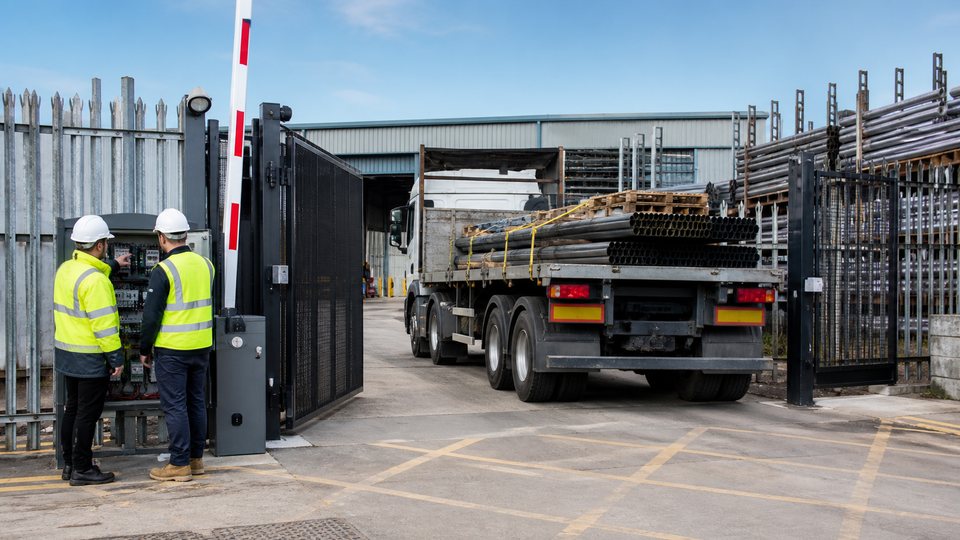
Challenge: valuable stock, contractors, irregular deliveries and heavy vehicle access tied to production.
LBS answer: robust entrance control, safe-use checks and repair support around high-value operational access points.
Powered gate safety
HSE guidance treats powered gates as machinery. Site-specific risk, safety devices, force limitation, emergency release, maintenance checks and records all matter because a gate or barrier interacts with people, vehicles, weather and daily use.
Common problems we repair
These issues often look like simple access problems, but they can quickly become dispatch, compliance or yard safety problems if the route is business-critical.
Motor, spring, control, loop or impact damage can stop authorised vehicles before they reach goods-in or dispatch.
Track, roller, motor, safety edge, photocell or control faults can create queues and unsafe workarounds.
Keypad, fob, intercom, loop or wiring faults can slow entry, confuse drivers and weaken site security.
Safety-device faults need careful attention because powered gates and barriers interact with people and vehicles.
A gate bypassed for convenience can become a security gap and a sign that the system needs diagnosis.
Barrier cabinets, arms, posts and gate hardware can be damaged by HGVs, vans or poor approach geometry.
When to speak to LBS
These are the moments where a gate or barrier issue stops being just a facilities job and starts affecting dispatch, safety, compliance or customer service.
A logistics site has trailers arriving before bays are ready. The entrance barrier becomes the control point, but intermittent loop faults leave drivers waiting on the road and the warehouse team chasing missed slots.
Review vehicle flow
A food manufacturer props the entrance open because the sliding gate keeps stopping during shift change. That solves the queue for ten minutes, but creates a security, visitor-control and safe-use problem.
Ask about fault diagnosis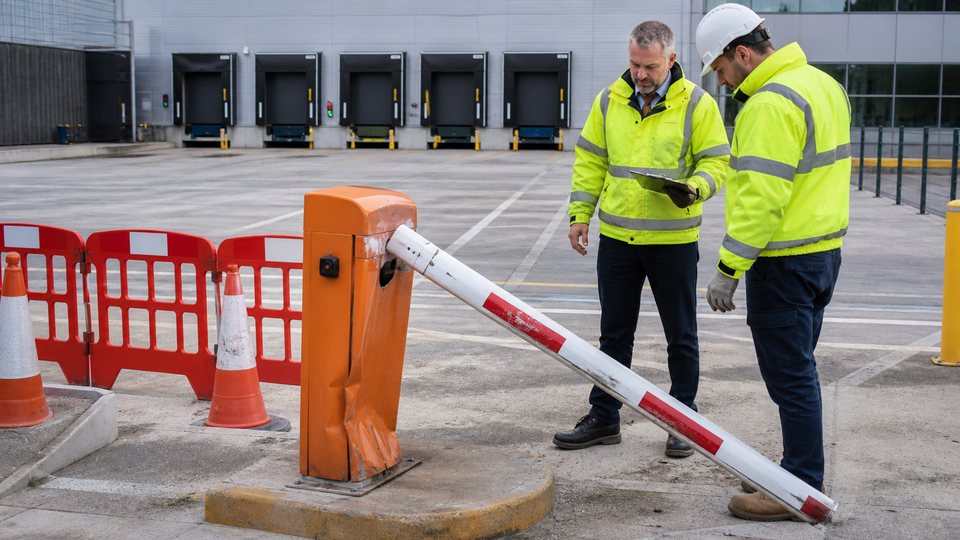
A warehousing yard keeps replacing barrier arms after van and HGV strikes. The repair matters, but so does the approach angle, signage, cabinet position and whether traffic is being sent through the wrong route.
Plan a practical site check
An engineering site has powered gates, access controls and barriers maintained by different routes. When safety evidence is requested, nobody can quickly show what has been checked, repaired or restricted.
Improve access records
A multi-bay warehouse has staff cars, contractors, vans and HGVs arriving through the same gate. If access permissions and signage are unclear, the loading yard becomes the place where routing mistakes show up.
Review access routes
A logistics operation relies on early morning and evening collections, but keypad, fob or intercom faults leave drivers calling supervisors instead of moving through the planned route.
Check access controlsAutomated gates and barriers FAQ
They control which vehicles reach the yard, reduce unplanned movement and help keep trailers away from loading bays until the site is ready.
Read the related guideA rising arm barrier suits fast controlled access for staff, visitors, delivery vehicles, car parks and yard entry points where traffic flow matters.
Read the related guideManagers should check safe movement, photocells, pressure edges, force limitation, emergency release, guarding, signage and maintenance records.
Read the related guideSometimes, but the gate condition, structure, hinges, track, geometry, duty cycle and safety risks need assessing before automation is added.
Read the related guideFurther reading
Understand the site facts that shape a safe and reliable entrance control decision.
See what evidence helps managers prove maintenance, safety checks and decisions.
Read how access control can affect loading bay uptime before the vehicle reaches the dock.
Get support
Tell us what entrance controls the site, what is failing or what you want to improve. LBS will help identify the right next step.